Department of Conservation
te papa atawhai
Whītiki taiao, take action for nature
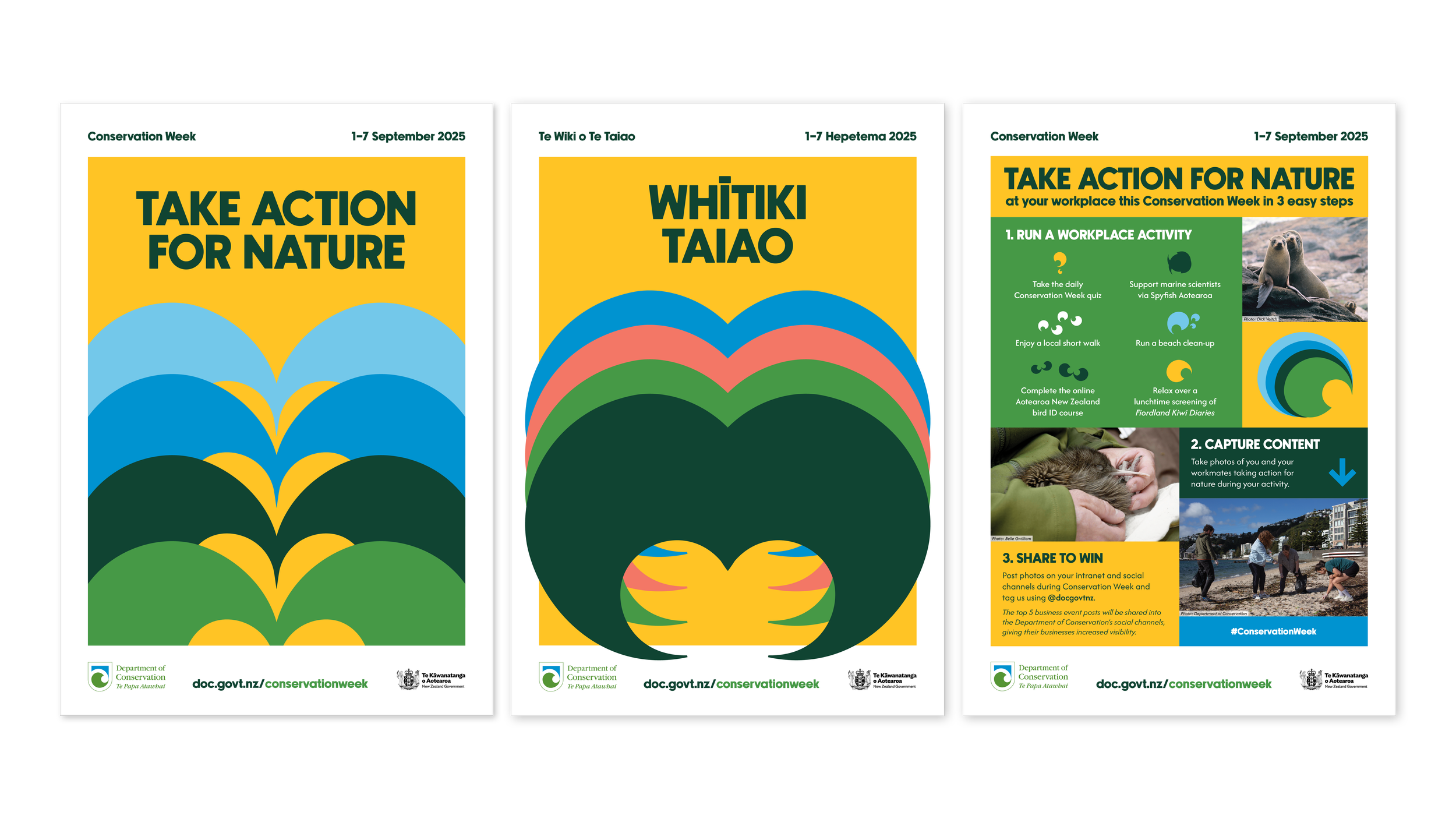
Conservation Week is an annual Department of Conservation (DOC) initiative encouraging action for nature. In 2025, the programme shifted focus to engage businesses in activating their communities, prompting a refreshed visual identity after several years with the same look.
Creative thinking
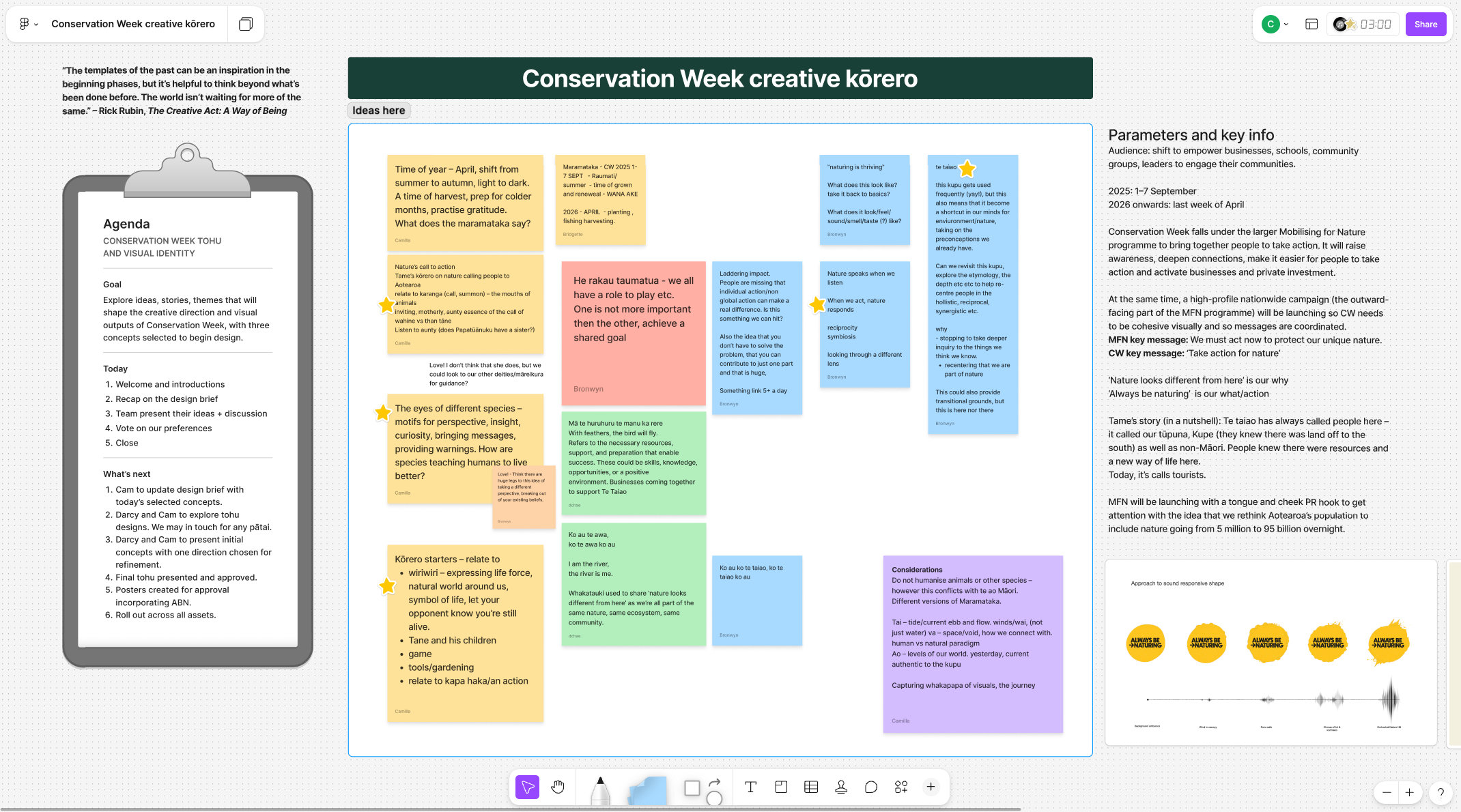
Working with DOC's Treaty Relationships and Brand teams, the brief was to create something rich in meaning: retain DOC's hero gold, align with shared values, and visually connect Conservation Week with the 'Always Be Naturing' national campaign launching simultaneously, all within a few short weeks.
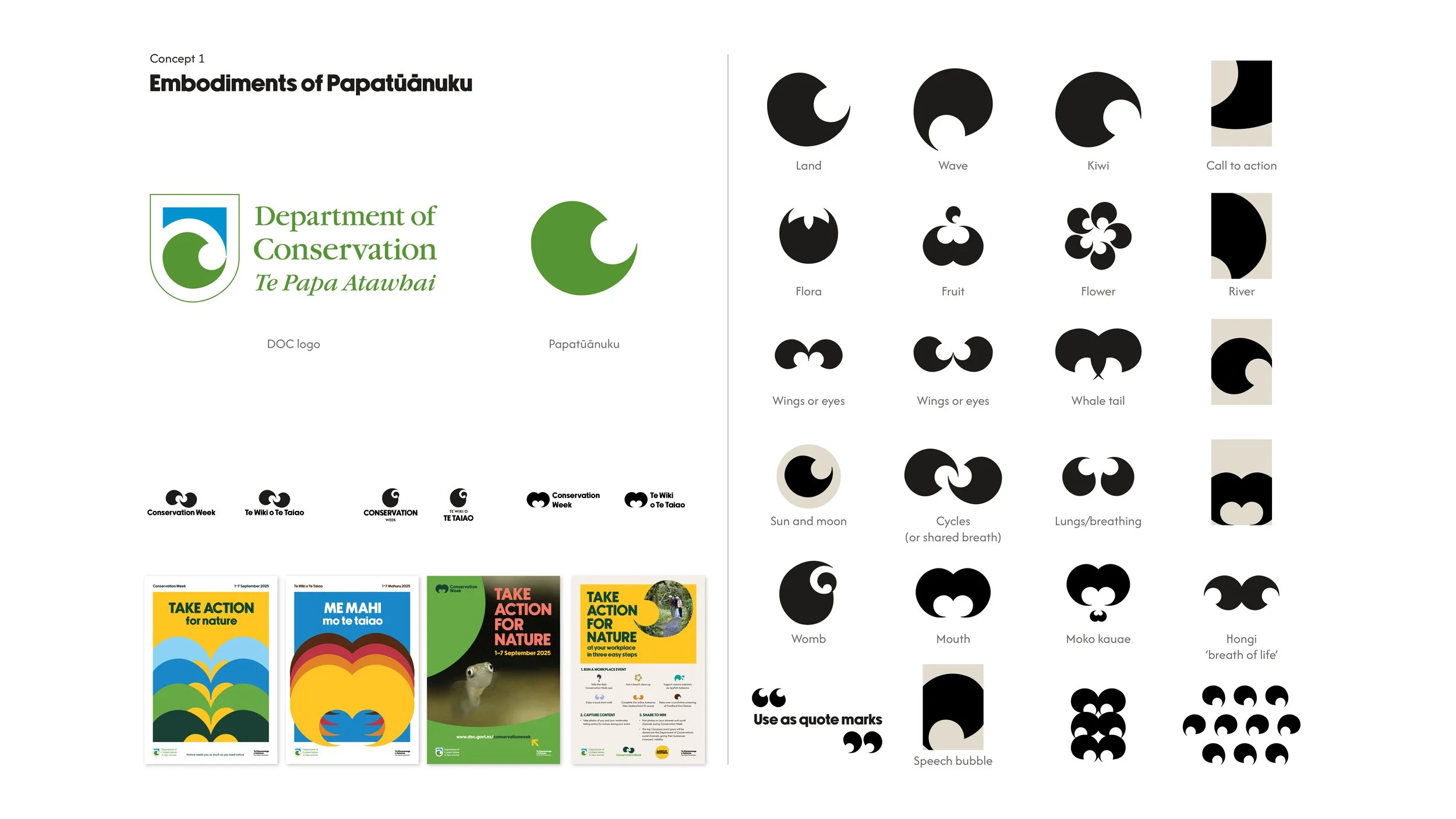
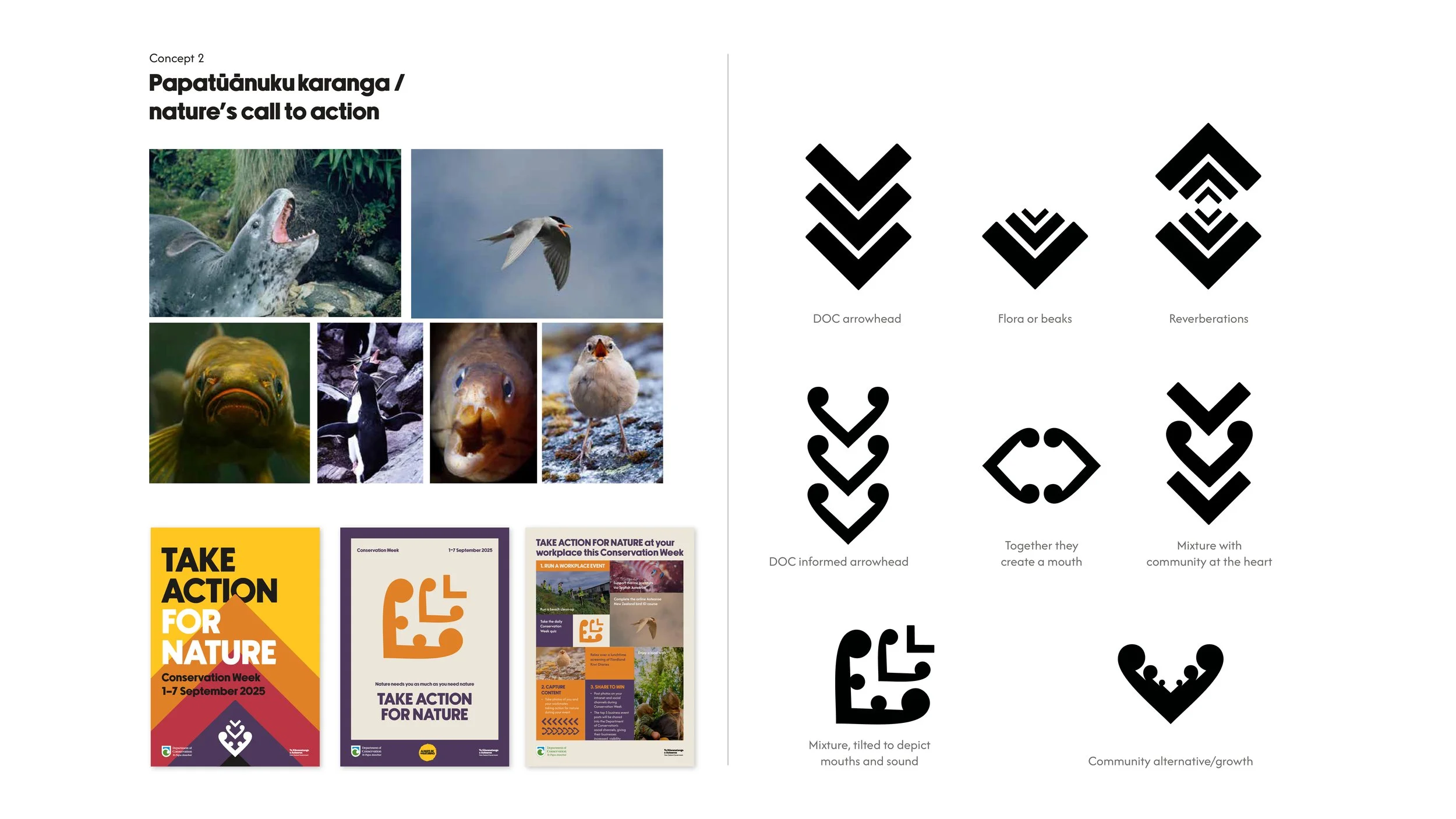
Through an online creative kōrero, a co-designed concept emerged drawing on the Papatūānuku form within DOC's tohu, expressing her many dimensions: whenua and wai, fertility, nurturing, natural cycles and her deep connection to whakapapa, tikanga and te ao Māori. The te reo Māori heading was developed in collaboration with a colleague and external advisor.
Creative doing
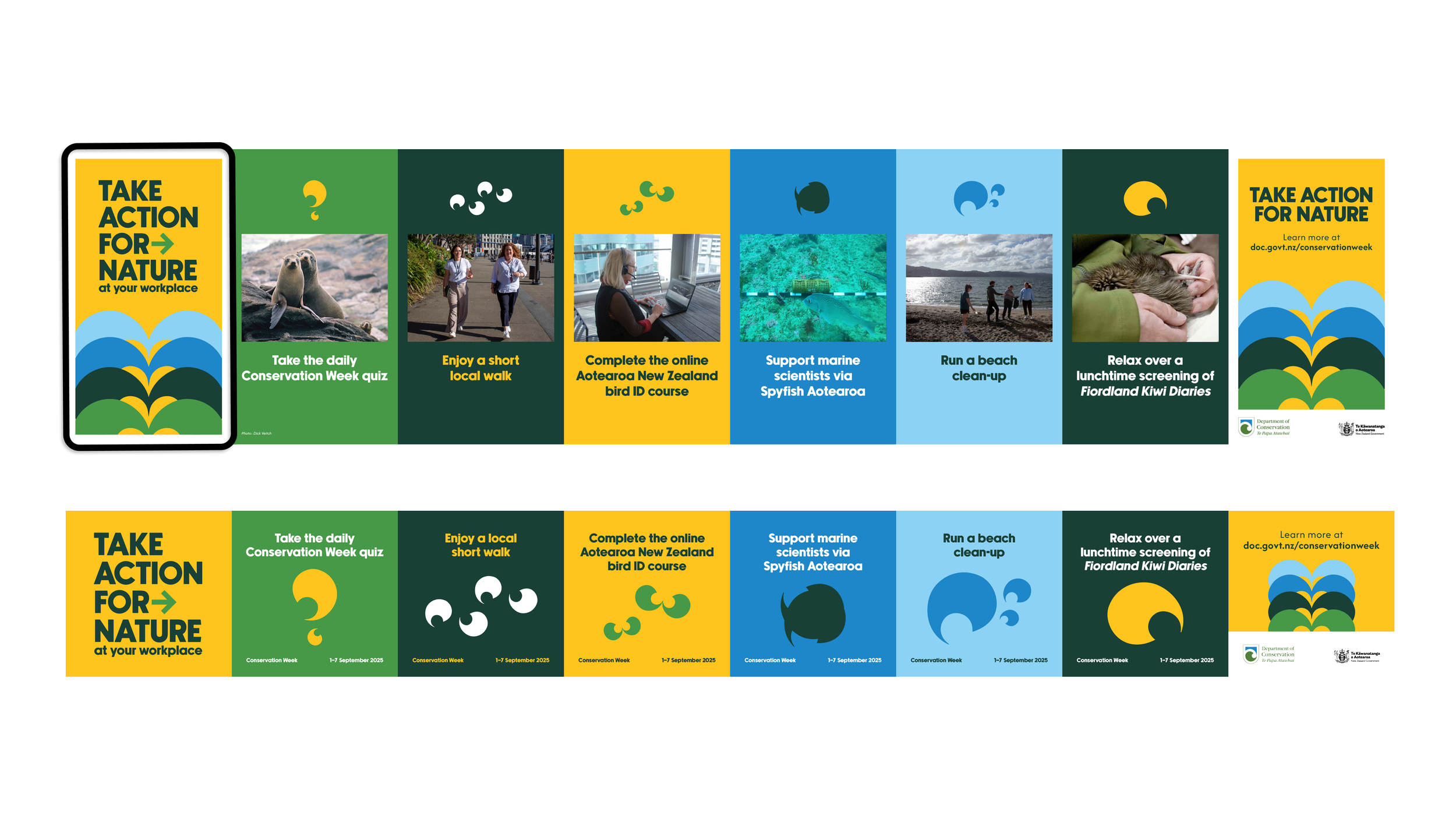
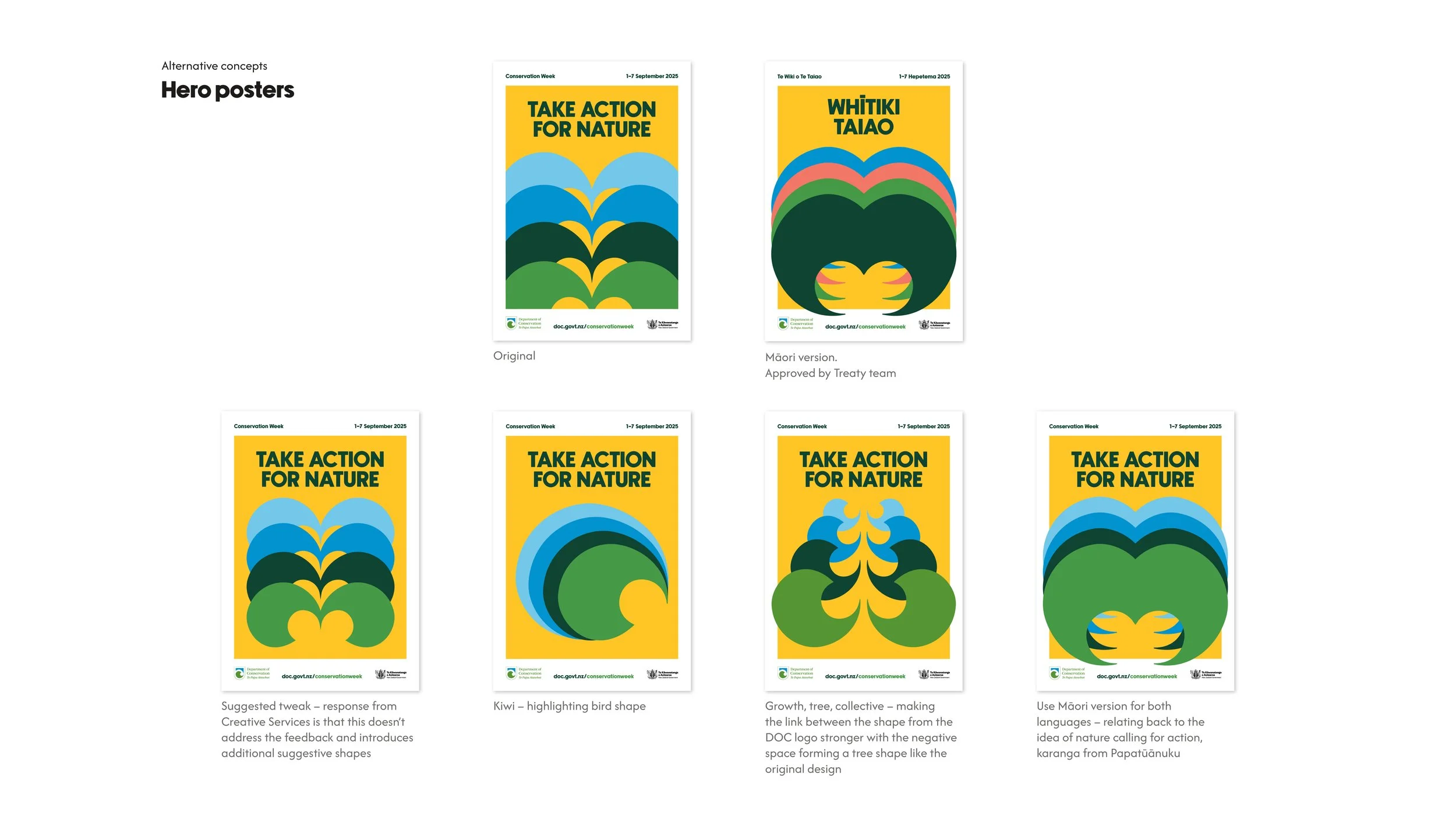
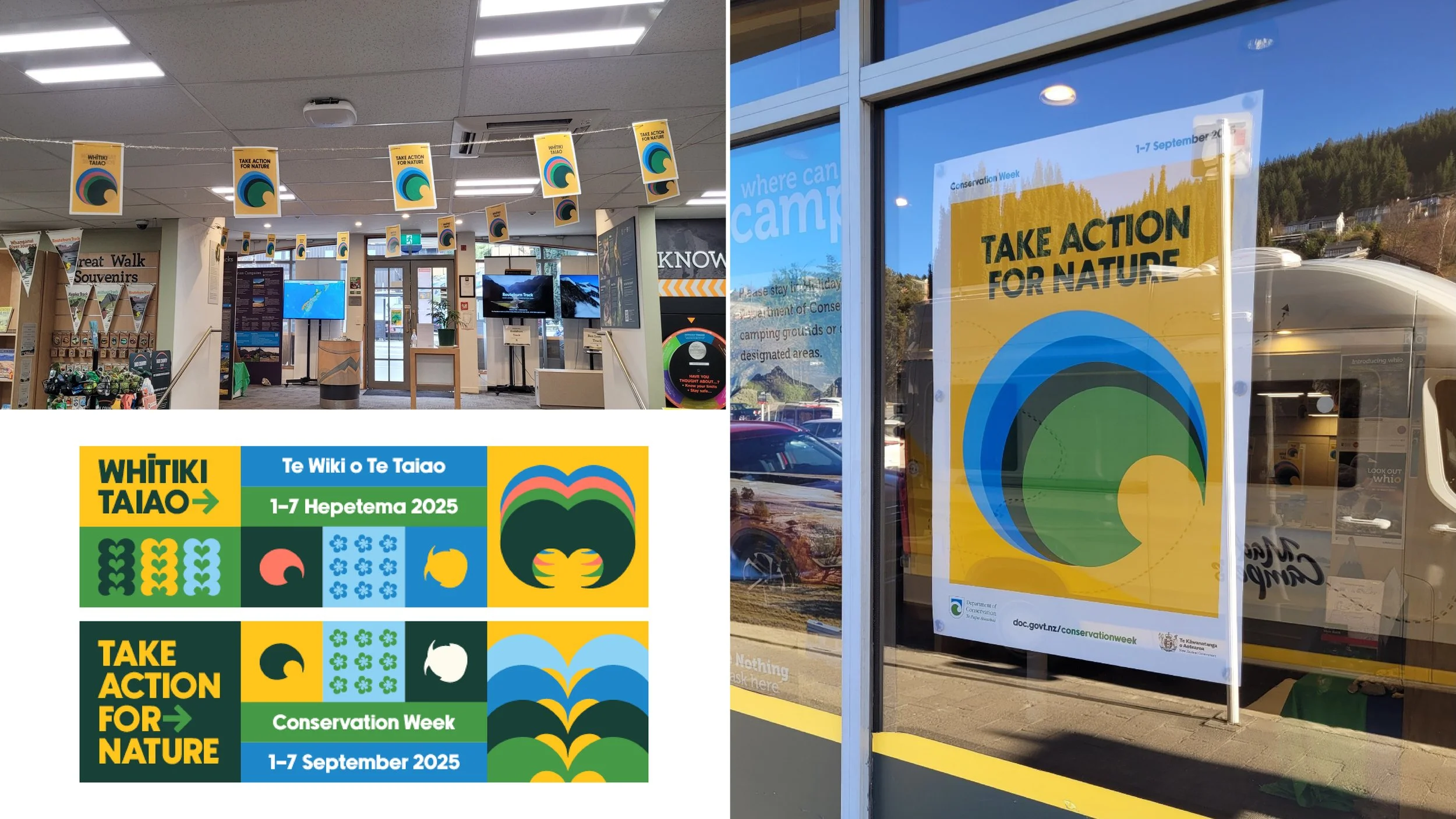
By rotating, reflecting and repeating the Papatūānuku form, the identity expresses a range of themes for a variety of audiences resulting in a flexible design system strongly connected to DOC while remaining distinctive and adaptable. Deliverables included posters, social media assets, and a public toolkit for others to create their own collateral.
Note: the final hero element was changed to a kiwi at the last minute showing exactly how adaptable the system was.
Creative partners
Department of Conservation – Treaty Relationships Group, Brand and Creative Services in-house teams.
The outcome
The campaign exceeded its digital targets across the board with 1.7 million social media impressions, 32% above target, 18,000 clicks across display and Meta ads and 17,000 landing page visits. More than 2,700 people visited the toolkit page with 20% downloading assets to create their own conservation content.
Research and data shows the new Conservation Week delivered broader reach across audiences than in prior years with a 5% increase among older demographics.